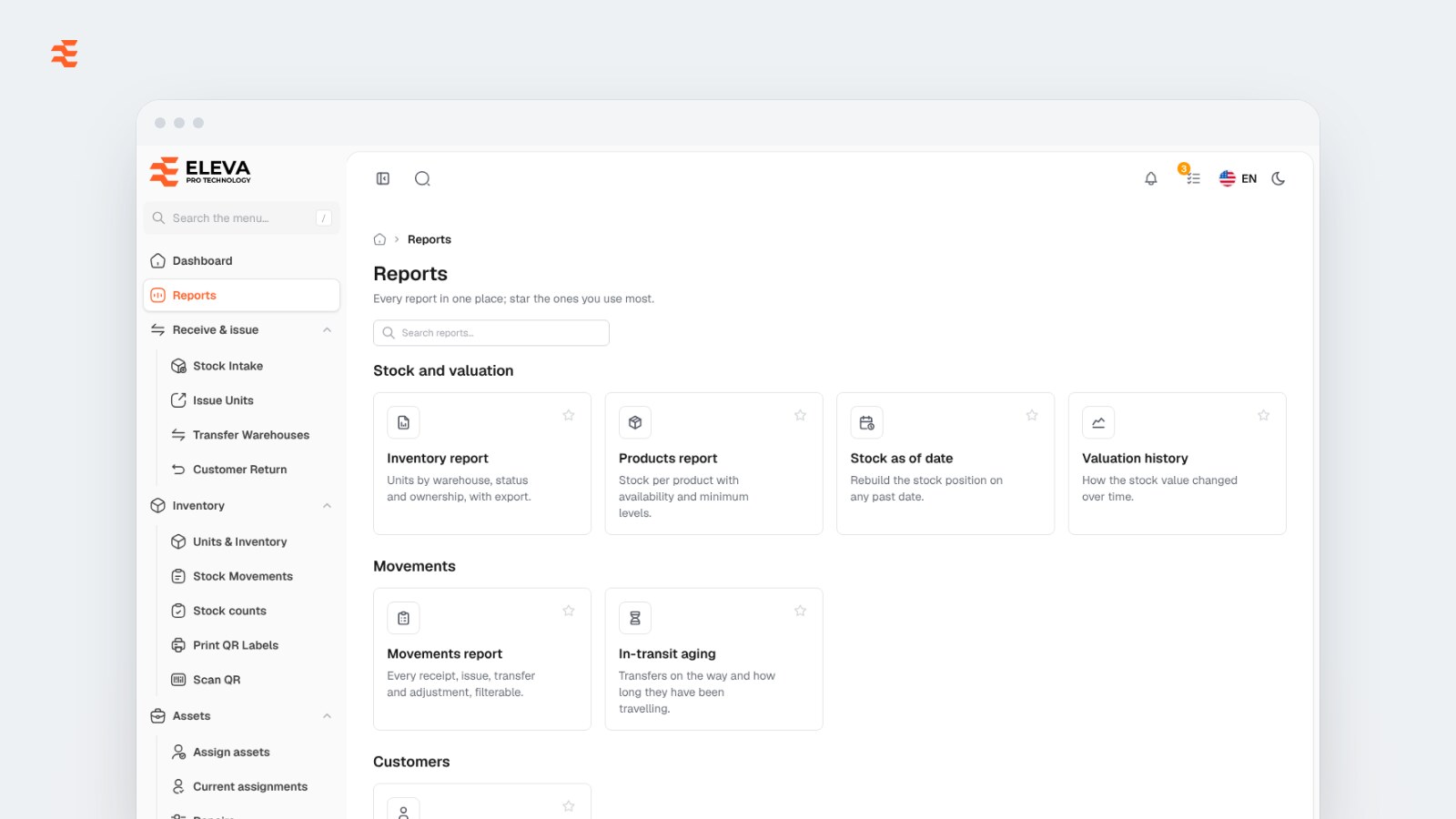
The real cost of a unit lost in your warehouse is not its purchase price. It is the purchase price plus the time spent looking for it, the premium paid to replace it urgently, the cost of work stopped or sales lost while waiting, the time spent investigating and writing it off, and the capital you tie up in extra "just in case" stock once nobody trusts the balance. In the worked example in this article, a unit that cost SAR 6,000 ends up costing SAR 8,580, about 1.4 times its book value. The numbers are hypothetical, but the method works for any company: we list the components, walk through the example step by step, then show how to gather your own data to calculate the figure for your warehouse.
Key takeaways
- The books record a lost unit at its cost only; search time, urgent purchases and downtime disappear into other budget lines.
- Research suggests the stockouts caused by undetected stock loss can cost far more than the lost stock itself.
- Use a simple formula: direct cost + search and admin + urgent replacement + downtime.
- Multiply the average true cost by the number of units lost per year to size the problem before deciding how to fix it.
Why does a lost unit look cheaper than it really is?
Once a company confirms a unit is gone, accounting records the loss at its book value. That is correct: IAS 2 Inventories requires losses of inventory to be recognised as an expense in the period the loss occurs. But that figure describes what the balance sheet lost, not what the company actually spent because of the loss. Staff hours spent searching sit in payroll, the urgent replacement sits in purchasing, and the delayed job sits in project costs. None of it appears under a line called "lost unit".
The bigger effect is usually indirect. Research by Kang and Gershwin at MIT showed that a small amount of stock loss the information system does not catch is enough to disrupt replenishment: the system believes the unit is there, so it does not reorder, and the team discovers the gap at the moment it needs the part. The study concluded that revenue lost to these stockouts can far exceed the value of the lost units themselves.
The scale across industries is not small either. The National Retail Federation's 2023 National Retail Security Survey put average shrink at 1.6% of sales in fiscal 2022, about $112.1 billion. In the ACFE's Occupational Fraud 2024 report, asset misappropriation, such as stealing cash or inventory, appeared in 89% of the cases studied, with a median loss of $120,000 per case. These figures come from other markets and sectors; we cite them to show that loss is measured in billions even in companies with control systems, not to estimate your loss. Your number comes from your own data, as described below.
What makes up the true cost of a lost unit?
Split the cost into six components. Not every component applies to every unit, but leaving one out without a reason makes the final figure lower than reality:
| Component | What you measure | Where the data comes from |
|---|---|---|
| Direct cost | The unit's cost as recorded | The receipt record or unit cost in your system |
| Search time | Staff hours spent looking × hourly cost | Asking the team after each case, and payroll |
| Urgent replacement | Urgent price minus normal price, plus express shipping | Urgent purchase invoices |
| Downtime or lost sale | A crew waiting for the part, a lost margin, or a late-delivery penalty | Project, sales and contract records |
| Investigation and write-off | Manager and accountant time to review and write off | Estimated hours per case |
| Excess buffer stock | Extra units the team keeps "just in case" because it doesn't trust the balance | Actual quantities compared with the required minimum |
The last component deserves attention because it outlives the incident. Once a team has been caught short a few times, it starts ordering more or hiding spare units, and money freezes in stock nobody needs. Setting the right minimum instead of an arbitrary buffer is covered in minimum stock and reorder point.
Worked example: what does one lost unit cost?
Illustrative example with hypothetical numbers: a network installation company in Riyadh needs a network switch for a customer project. The warehouse records show its cost as SAR 6,000 and a balance of one unit, but the storekeeper cannot find it. Here is what follows:
- Search: three employees spend four hours checking the warehouse and sites, at SAR 40 per hour: 3 × 4 × 40 = SAR 480.
- Investigation and write-off: two hours of manager and accountant time at SAR 75 per hour: 2 × 75 = SAR 150. Search and admin together: SAR 630.
- Urgent replacement: the usual supplier needs a week, so the unit is bought from a local distributor at a 15% premium: 0.15 × 6,000 = SAR 900, plus SAR 250 express delivery. Total: SAR 1,150.
- Downtime: a crew of two technicians waits one full working day (8 hours) at SAR 50 per hour each: 2 × 8 × 50 = SAR 800.
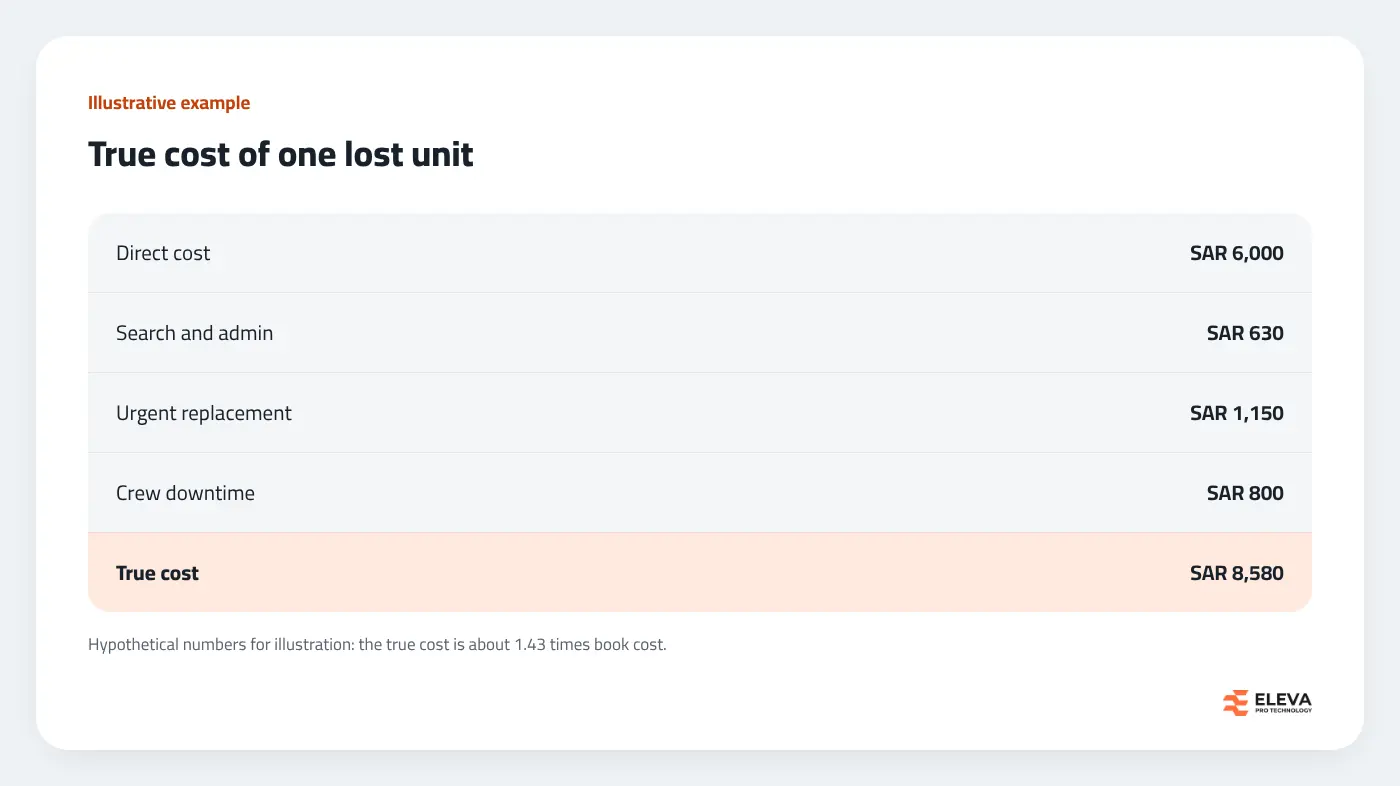
Total: 6,000 + 630 + 1,150 + 800 = SAR 8,580, about 1.43 times the book cost. That excludes any contractual late penalty, the effect on the customer relationship, and the spare unit the team will now order "so this never happens again". And if the original unit later turns up at another site, it becomes surplus stock rather than recovering the loss.
From one unit to a full year
The calculation earns its keep when you add up the cases. Continuing the same illustrative example: if the company loses 25 units a year at an average book cost of SAR 6,000, the books show a loss of SAR 150,000. At an average true cost of SAR 8,580, the loss is SAR 214,500, an extra SAR 64,500 that no single report shows.
| Illustrative example (one year) | At book cost | At true cost |
|---|---|---|
| Cost per unit | SAR 6,000 | SAR 8,580 |
| Units lost | 25 | 25 |
| Annual loss | SAR 150,000 | SAR 214,500 |
This is the figure to compare against any fix you are considering, whether that is hiring a stock controller, changing issue procedures or a unit-tracking system. If the fix costs less than the gap it closes, it is a financial decision before it is a technical one.
How do you calculate the hidden cost in your company?
You do not need perfect precision on day one. You need a reasonable figure to build on, then refine it:
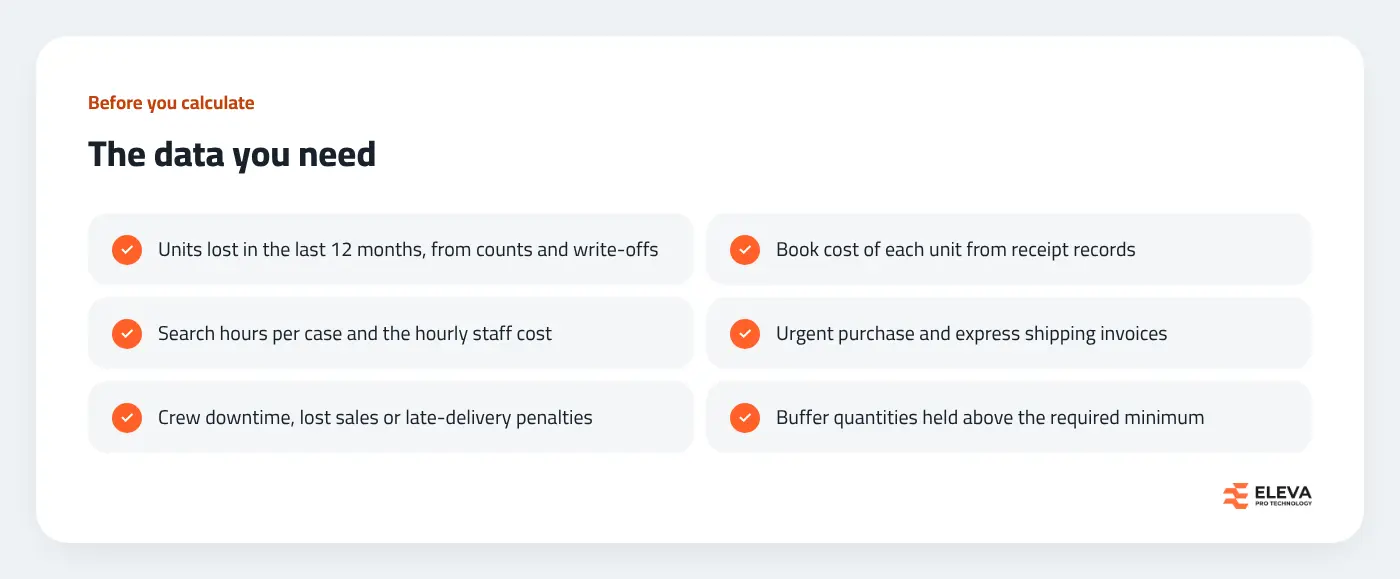
- Count the units lost in the last 12 months from count results and write-off documents. If you have no records, run one count now.
- Work out the average book cost of those units from receipt records.
- Pick five recent cases and ask the team: how many hours did you search? Did we buy an urgent replacement? Did work stop or a customer wait?
- Average the extra costs of those cases as in the example, and add them to the book cost.
- Multiply the average by the annual count and review the figure each quarter with new count results.
While gathering the data you will learn something important: where units go missing. If cases cluster in transfers, in one warehouse or in one kind of item, you know where to start. The recurring causes and how to trace them are covered in why physical stock doesn't match the books, and counting in small batches catches losses early before their cost builds up, as explained in the cycle counting guide.
How Eleva's system handles this
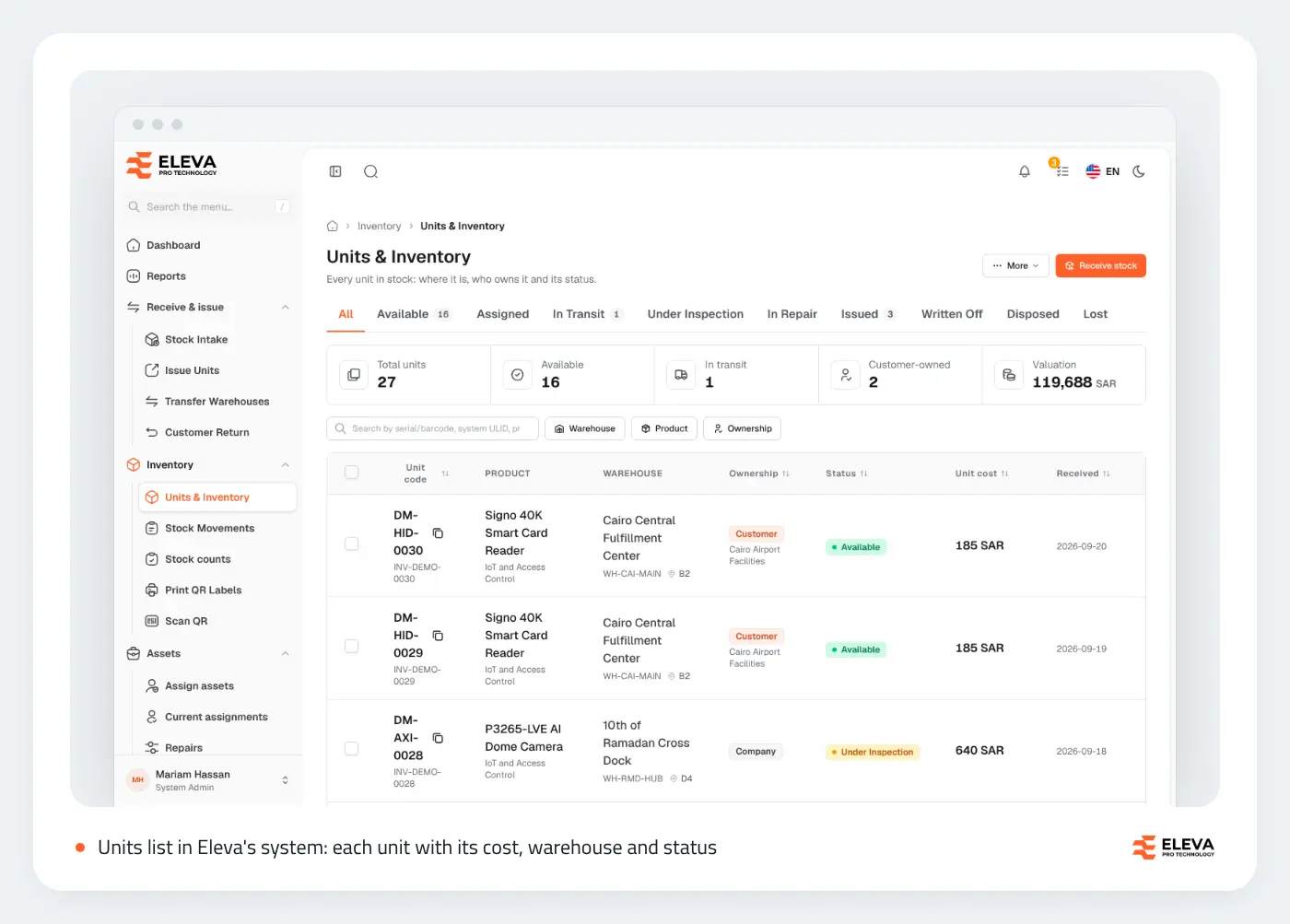
The calculation above needs reliable data, which is what Eleva's Warehouse Tracking & Management System records. Each unit's cost, receipt date, days in stock and movement history are on its unit details page, so you know the direct cost and who last handled the unit. When a stock count is reconciled, missing units are marked lost and a message states how many, so the yearly number of cases is a record rather than a guess.
A write-off goes through approval with a required reason, an optional attachment and the total cost of the selected units, and the units stay reserved until it is approved. To measure the effect on stock value, the stock as of a date report rebuilds the balance and its value on any past day, and the valuation history report shows each warehouse's value at every month end, with Excel export.
FAQ
How is lost inventory recorded in the accounts?
Under IAS 2, inventory losses are recognised as an expense in the period they occur. The details, such as the account used and the documents required, depend on your company's policy and local tax rules, so confirm them with your accountant or external auditor.
Should I value the loss at purchase price or selling price?
The books use cost. When you estimate the true cost to make a decision, add the lost margin only if a sale was actually lost because of the missing unit, and add the replacement price difference if you bought a substitute at a higher price.
What if the unit turns up after it was written off?
Register it again with a clear document that links it to the original loss, so it does not show up as stock of unknown origin in the next count.
Conclusion
A lost unit costs more than its price, and the difference is spread across budget lines nobody links back to the loss. Work out the true cost once with the method above and you will know how much preventing losses is worth. For the criteria to choose a system that records this data for you, read our guide to choosing a warehouse management system. If you would like help running the numbers on your own warehouse data, contact us.
Try the Warehouse Tracking & Management System yourself: the live demo with sample data, and the step-by-step user manual. The system is sold as a one-time licence or a fixed annual fee plus annual maintenance, installed on your company's server with no fee per warehouse or user. Request a demo from the product page.